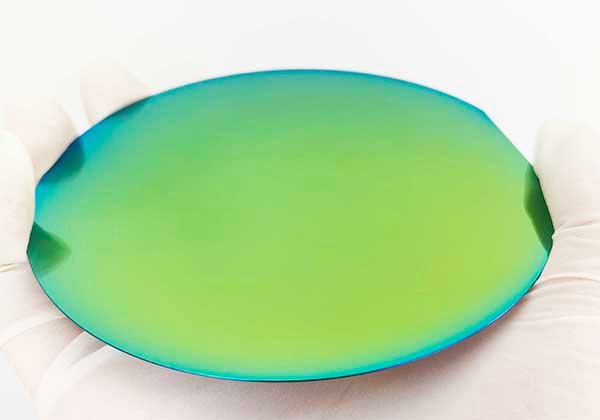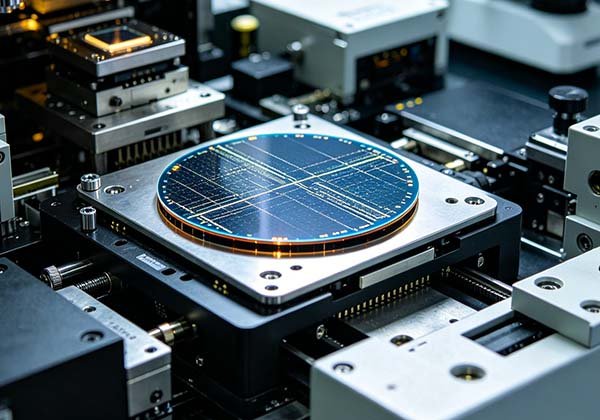


Micro/nano fabrication and semiconductor materials are two fundamental pillars of the digital age. Semiconductor materials provide the physical foundation for chips and devices, while micro/nano fabrication acts as the precision tool that transforms those materials into functional structures.
Silicon remains the most widely used semiconductor material because of its abundant supply, mature processing technology and excellent compatibility with oxide layers and integrated circuit manufacturing. In addition to silicon, compound semiconductors, wide-bandgap materials, SOI wafers, glass, quartz and polymer materials are used for different electrical, optical, thermal and mechanical requirements.
Micro/nano fabrication processes such as lithography, etching, deposition, doping, bonding, polishing and dicing allow engineers to create circuit patterns, functional films, microstructures and three-dimensional device architectures. These processes require strong coordination between material characteristics and process conditions.
In chip manufacturing, micro/nano fabrication determines transistor dimensions, interconnect structures and device integration. In MEMS, it enables mechanical structures such as membranes, cantilevers, cavities and microchannels. In optoelectronics, it supports waveguides, photonic crystals, filters and sensor structures.
The development of AI, 5G, IoT, autonomous driving and advanced medical devices continues to raise demands for semiconductor materials and micro/nano fabrication. Higher purity, better flatness, lower defect density, thinner films and more precise patterning are all becoming essential.
Looking forward, new materials and advanced fabrication methods will continue to promote device miniaturization, higher performance and new applications. The deep integration of materials science and precision manufacturing will remain a key driving force for semiconductor and micro/nano technology innovation.