

Wafers are the core carriers of semiconductor chips, and their manufacturing process can be viewed as precision art in the microscopic world. From raw silicon to qualified wafers, the process involves dozens of complex steps carried out in ultra-clean and high-precision environments. Wafer quality directly determines chip performance and reliability, while MEMS processing technologies play important roles in many core steps.
The main raw material of silicon wafers is high-purity silicon. Chemical purification converts industrial silicon into electronic-grade silicon with extremely high purity. Single-crystal silicon ingots are then grown using methods such as the Czochralski process or float-zone method. In the Czochralski process, purified silicon is melted in a quartz crucible at about 1420°C, a seed crystal is inserted, and the crystal is slowly rotated and pulled upward to form a cylindrical single-crystal ingot with orderly atomic arrangement.
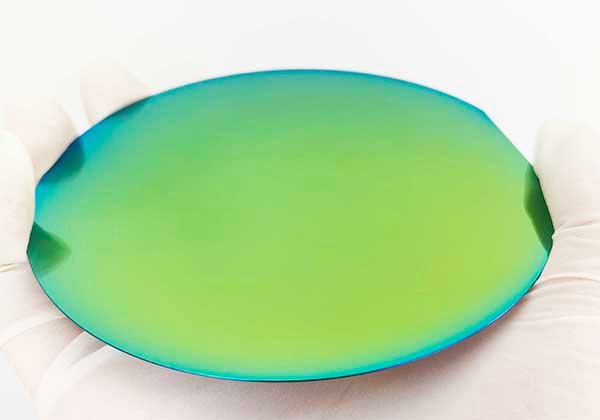
The silicon ingot is cut into circular wafers of uniform thickness, commonly in 4-inch, 6-inch, 8-inch or 12-inch sizes. After slicing, the wafer surface is rough and contains damage layers. Grinding removes surface defects, chemical etching removes residual stress layers, and Chemical Mechanical Polishing (CMP) produces a mirror-like surface with nanometer-level flatness, meeting the requirements of later deposition and lithography.
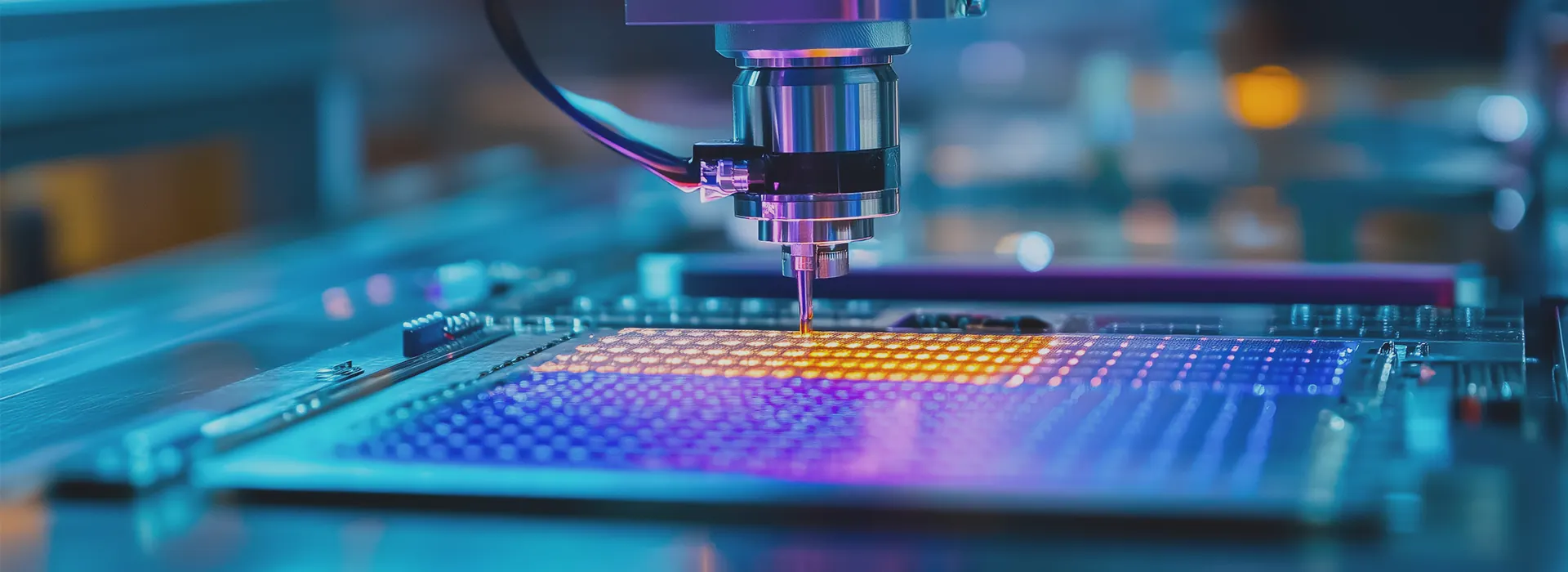
Thin-film deposition forms specific material layers on the wafer surface. It includes Physical Vapor Deposition (PVD) and Chemical Vapor Deposition (CVD), both of which are important MEMS processes. PVD uses sputtering or evaporation to deposit target atoms, making it suitable for metal electrodes and conductive layers. CVD forms films through chemical reactions and can prepare silicon oxide, silicon nitride, polysilicon and other insulating or functional films.
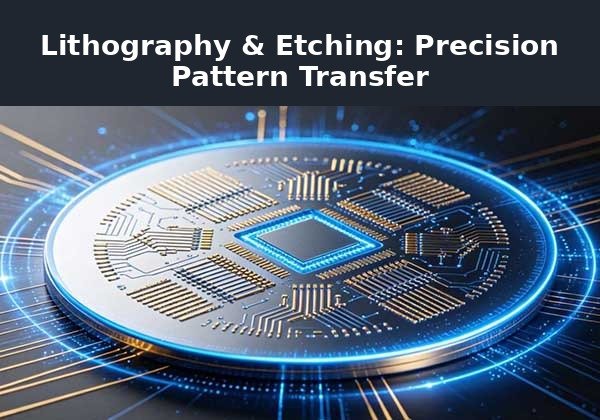
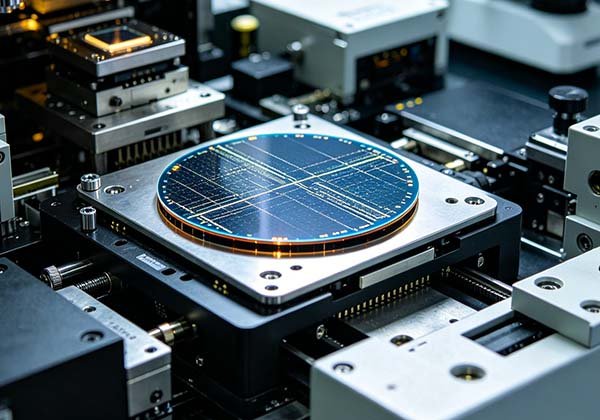
Lithography transfers chip design patterns onto the wafer surface. Photoresist is coated on the wafer, exposed by ultraviolet or EUV light, developed and cleaned to form a resist mask. Etching then removes selected materials to transfer the pattern into the underlying layer. Dry etching such as plasma etching provides anisotropic profiles, while wet etching uses chemical solutions for selective material removal.
Doping changes semiconductor electrical properties through ion implantation or diffusion. MEMS-related processes may also include wafer bonding, sacrificial-layer release, deep silicon etching, cavity formation and wafer-level packaging. These processes make it possible to manufacture sensors, actuators and complex microstructures on wafers.
Wafer manufacturing and MEMS processing are highly integrated. High-quality wafers provide the foundation, while micro/nano processes transform that foundation into functional semiconductor and MEMS devices.