

MEMS devices integrate microelectronics and micromechanics and are widely used in consumer electronics, medical health, autonomous driving, optical communications and other key fields. Their performance depends directly on high-performance thin-film materials and precision processing technologies. Thin-film materials provide structural support, functional response and reliability assurance for MEMS devices. Together with precise and controllable fabrication processes, they form the foundation of MEMS manufacturing and drive devices toward miniaturization, higher sensitivity and higher reliability.
High-performance thin-film materials are the functional carriers of MEMS devices and must offer excellent mechanical, electrical, thermal and biocompatibility properties for different application scenarios. Common thin-film materials in MEMS manufacturing can be divided into several categories. Silicon-based thin films are the most widely used basic materials, including single-crystal silicon, polysilicon, silicon nitride, silicon dioxide and related derivatives. Polysilicon is often used as a micromechanical structural layer because of its elasticity and strength, and its conductivity can be precisely adjusted through doping, making it a core material for devices such as automotive airbag accelerometers. Silicon nitride films can be optimized for stress by controlling deposition conditions and are often used as insulating layers and structural support layers to ensure device stability.
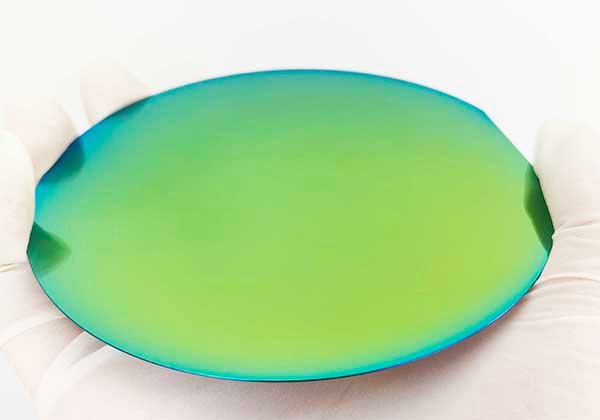
Piezoelectric thin films are key materials for improving MEMS performance. Representative materials include scandium-doped aluminum nitride (AlScN) and PZT. The electromechanical coupling coefficient of AlScN can be significantly higher than that of conventional materials, and it can work stably under extreme temperatures. It is lead-free, environmentally friendly and thickness-controllable, making it widely applicable in MEMS microphones, optical switches and other devices, improving noise reduction and signal transmission speed. PZT has a higher piezoelectric coefficient and is suitable for actuator devices. High-quality PZT thin-film deposition on 8-inch wafers has enabled greater compatibility with CMOS process integration. In addition, metal films such as aluminum, gold and titanium are used for electrical interconnects and electrodes, while polymer films such as PDMS and SU-8 play important roles in medical MEMS devices due to their biocompatibility.
Precision processing technologies are essential for releasing thin-film material performance and achieving miniaturized, high-precision MEMS devices. The core process chain centers on film deposition, patterning and etching. Thin-film deposition includes physical vapor deposition (PVD) and chemical vapor deposition (CVD). Sputtering in PVD can prepare high-purity silicon dioxide films at relatively low temperatures, reducing thermal impact on the substrate and making it suitable for temperature-sensitive materials, though deposition rate can be slow and equipment investment high. PECVD in CVD can precisely control the thickness and stress of films such as silicon nitride and is suitable for large-scale production, making it a mainstream deposition method.
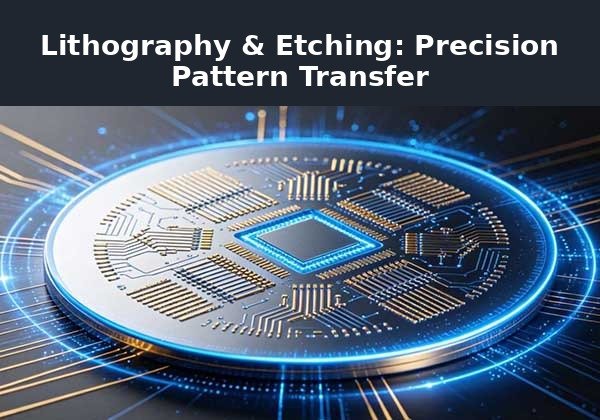
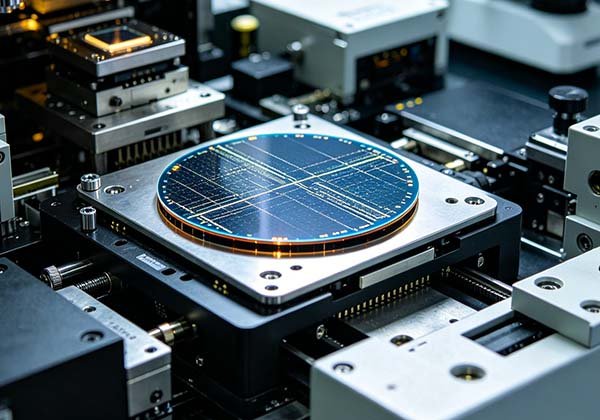
Patterning and etching transfer design patterns onto thin films and determine structural accuracy. Lithography, the core patterning process, transfers patterns to the film surface through photoresist coating, mask exposure and development. Positive photoresist offers high resolution, while negative photoresist offers lower cost; selection should be based on device precision requirements. Etching is divided into wet and dry methods. Wet etching is simple and low-cost and suitable for simple structures, while dry etching provides anisotropy and can create fine structures with steep sidewalls and nanoscale precision, making it a key process for high-end MEMS manufacturing. Wafer-level integration and laser micromachining further address challenges such as thin-film integration difficulty and high production cost, helping shorten development cycles and improve device performance.
As the MEMS industry moves toward quantum sensing and intelligent integration, thin-film materials and processing technologies face higher requirements. New lead-free piezoelectric films and nanocomposite films are breaking through traditional material limits. The spread of 8-inch and 12-inch wafer-level processing helps balance performance and production cost. Overall, high-performance thin-film materials define the functional boundary and performance ceiling of MEMS devices, while precision processing realizes the controlled release of material properties. The two are complementary and indispensable. In the future, deeper integration of material development and processing technologies will drive MEMS devices toward smaller, smarter and more reliable solutions for the intelligent era.