

Micro/nano fabrication refers to a series of technical methods capable of processing materials and manufacturing structures at micrometer to nanometer scales. It is one of the core technologies in modern precision manufacturing. With the rapid development of semiconductors, optoelectronics, biomedicine and related industries, micro/nano fabrication has become a key driver of high-tech industrial progress. Compared with conventional machining, micro/nano fabrication offers high precision, high material utilization and the ability to form complex three-dimensional structures.
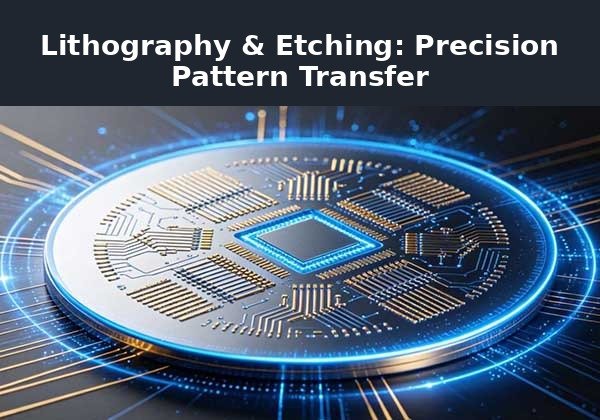
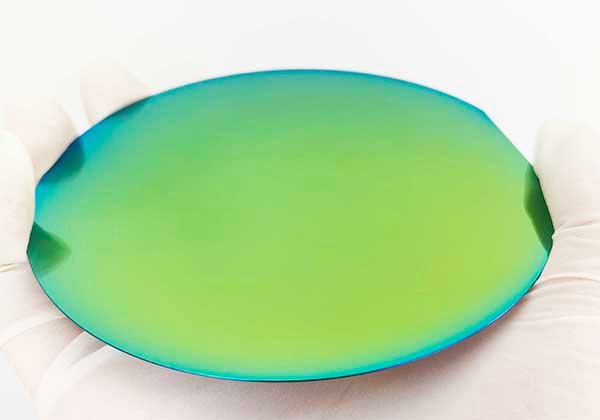
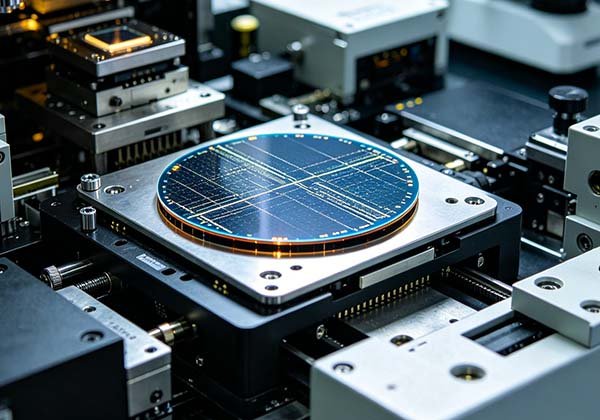
Lithography. Lithography is one of the most fundamental and critical technologies in micro/nano fabrication. It mainly includes optical lithography, electron-beam lithography and X-ray lithography. Extreme ultraviolet (EUV) lithography can enable chip manufacturing below the 7 nm node and is currently one of the most advanced mass-production technologies in the semiconductor industry. The core of lithography is to transfer patterns from a mask onto photoresist through exposure and development, and then transfer the pattern to the substrate material through etching.
Etching. Etching processes can be divided into dry etching and wet etching. In dry etching, reactive ion etching (RIE) and deep reactive ion etching (DRIE) are widely used to fabricate high-aspect-ratio structures. Wet etching uses the selective corrosion characteristics of chemical solutions and is often applied to anisotropic etching of silicon. Advanced etching technologies can achieve nanoscale dimensional control and meet the processing requirements of different materials.
Thin-film deposition. Physical vapor deposition (PVD) and chemical vapor deposition (CVD) are the two major thin-film deposition methods. Atomic layer deposition (ALD), with excellent step coverage and atomic-level thickness control, is playing an increasingly important role in nanodevice manufacturing. The quality of thin-film deposition directly affects the performance and reliability of subsequent micro/nano structures.
Semiconductor industry. Micro/nano fabrication is the foundation of semiconductor chip manufacturing. From CPUs and memories to various sensors, all depend on precision micro/nano processes. As process nodes continue to shrink, requirements for fabrication accuracy become increasingly demanding.
MEMS device manufacturing. Micro-electro-mechanical systems (MEMS), such as accelerometers, gyroscopes and pressure sensors, are realized through micro/nano fabrication technologies. Surface micromachining and bulk micromachining are two major process routes in MEMS manufacturing.
Optoelectronic devices. Photonic crystals, optical waveguides, microlens arrays and other optoelectronic components also rely on micro/nano fabrication. In particular, the rapid development of silicon photonics has created new challenges and requirements for micro/nano processes.
Future micro/nano fabrication will develop toward higher precision, higher efficiency and lower cost. New processing methods, such as nanoimprint lithography and self-assembly, will be combined with conventional processes to continue pushing the limits of fabrication. At the same time, green manufacturing concepts will increasingly be introduced into micro/nano fabrication to reduce energy consumption and environmental impact during processing.
With the rise of artificial intelligence, the Internet of Things and other emerging technologies, demand for micro/nano devices will continue to grow. Micro/nano fabrication will demonstrate important value in more fields and remain one of the core forces driving technological progress.