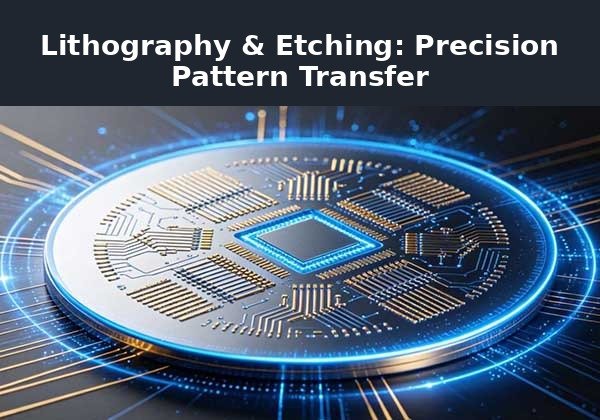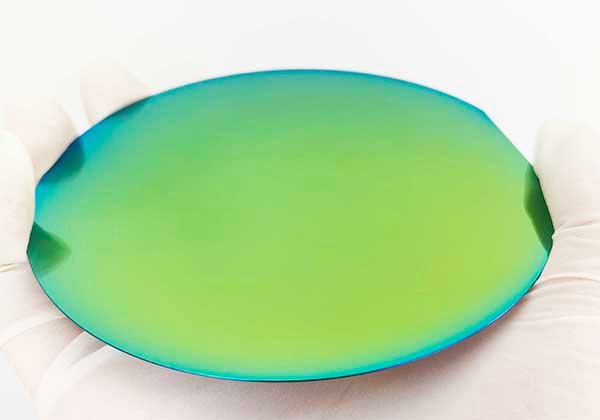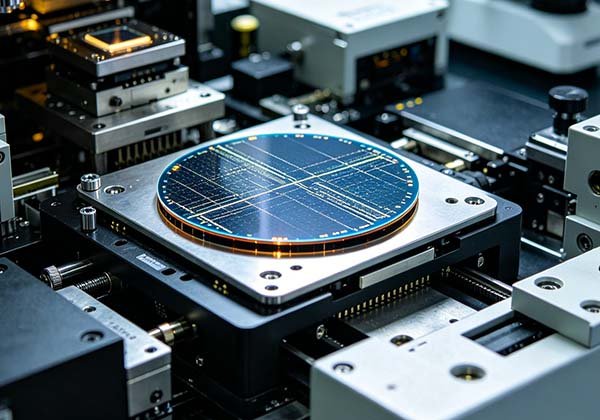


In today’s high-technology manufacturing fields, micro/nano fabrication has become a core support for semiconductors, optoelectronics, MEMS and related industries. Among these processes, etching is one of the most critical steps. Its accuracy and efficiency directly affect device performance, structural reliability and manufacturing yield.
Etching selectively removes designated areas of a material surface by physical or chemical means. In micro/nano manufacturing, it is the key link that transfers patterns from a mask or resist layer into the underlying material. At small feature sizes, etching must provide nanometer-level or even atomic-level control, which places high requirements on equipment, process recipes and material compatibility.
The value of etching is reflected in high-precision pattern transfer, the formation of three-dimensional microstructures, the realization of device functions and the control of final performance parameters. For many devices, the etched profile is not only a geometric result, but also a determinant of electrical, optical or mechanical behavior.
Wet etching uses chemical solutions to react with and remove target materials. It features simple equipment, low cost and high throughput, and is suitable for preliminary wafer cleaning, rough processing, low-precision patterning and batch removal of specific materials. Its limitation is relatively poor anisotropy, which makes it difficult to meet the requirements of fine modern micro/nano patterns.
Dry etching removes materials through active particles generated in plasma and has become a mainstream technology in modern micro/nano fabrication. Reactive ion etching (RIE) combines physical sputtering and chemical reaction to provide good anisotropy. Deep reactive ion etching (DRIE), including the Bosch process, is used for high-aspect-ratio structures. Ion beam etching (IBE) is a physical process suited to materials that are difficult to chemically etch.
Dry etching provides high-precision pattern-transfer capability, excellent anisotropy control, compatibility with multiple material systems and good compatibility with IC process flows.
Etching quality is determined by etch rate, selectivity, uniformity, anisotropy, surface roughness and damage depth. Etch rate affects production efficiency and cost; selectivity describes the etch-rate ratio between different materials; uniformity measures wafer-to-wafer and within-wafer consistency; anisotropy determines sidewall verticality; roughness and damage influence device properties.
Optimizing these parameters requires a comprehensive understanding of tool capability, process conditions and material characteristics. This is the core work of etching process development.
In integrated circuit manufacturing, etching is used throughout the process. In front-end-of-line processes, it is used for gate etching and isolation trench etching. In back-end-of-line processes, it is used for interconnect trenches and via etching. In advanced nodes, self-aligned etching in multiple-patterning flows has become increasingly important. As process nodes continue to shrink, atomic layer etching (ALE) is gaining attention because of its outstanding controllability.
In MEMS manufacturing, etching enables precise three-dimensional structures. Examples include deep silicon etching for inertial sensor structures, release etching for cantilevers and cavities, and thin-film patterning for microactuators. In optoelectronic devices, etching is used to fabricate periodic laser gratings, photonic crystal nanohole arrays and smooth waveguide sidewalls.
Etching still faces challenges such as achieving atomic-scale precision, developing processes for new materials such as two-dimensional materials, controlling sidewall morphology in high-aspect-ratio features, and reducing process-induced damage and contamination.
Future development will focus on atomic-scale etching, including ALE optimization, selective atomic removal and in-situ monitoring with feedback control. Directional self-assembly combined with etching may reduce multi-patterning steps and improve resolution. Greener etching processes will reduce harmful gas use, energy consumption and material waste. AI-driven etching will support process-parameter optimization, defect prediction and virtual process development.
As a core link in micro/nano fabrication, advances in etching technology will continue to drive progress in semiconductors, MEMS and optoelectronics. Future etching will move toward atomic-level precision, high selectivity and low damage, while integrating imaging technology, materials science and artificial intelligence to support next-generation micro/nano devices.