

MEMS technology is widely used in consumer electronics, automotive systems, aerospace and many other fields. Its core lies in micro/nano fabrication processes that make it possible to manufacture complex mechanical structures and electronic devices at micrometer and even nanometer scales.
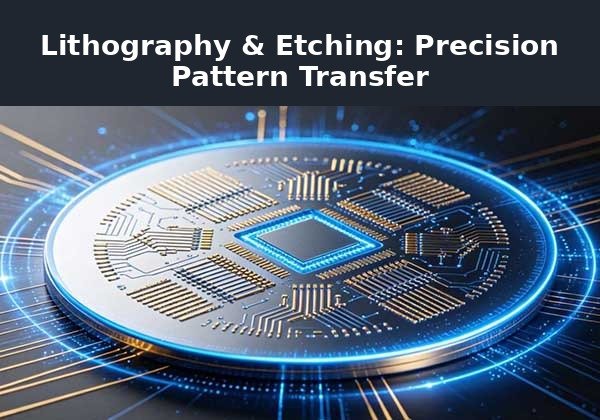
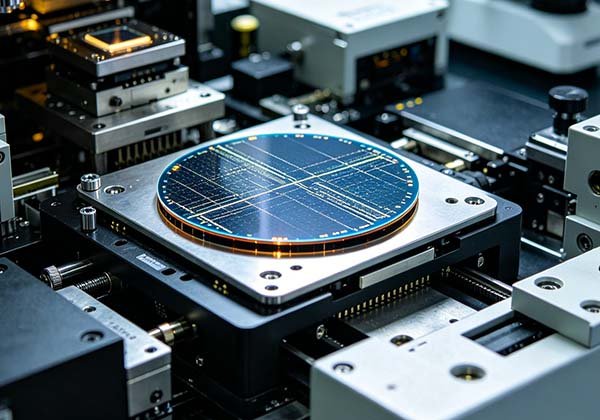
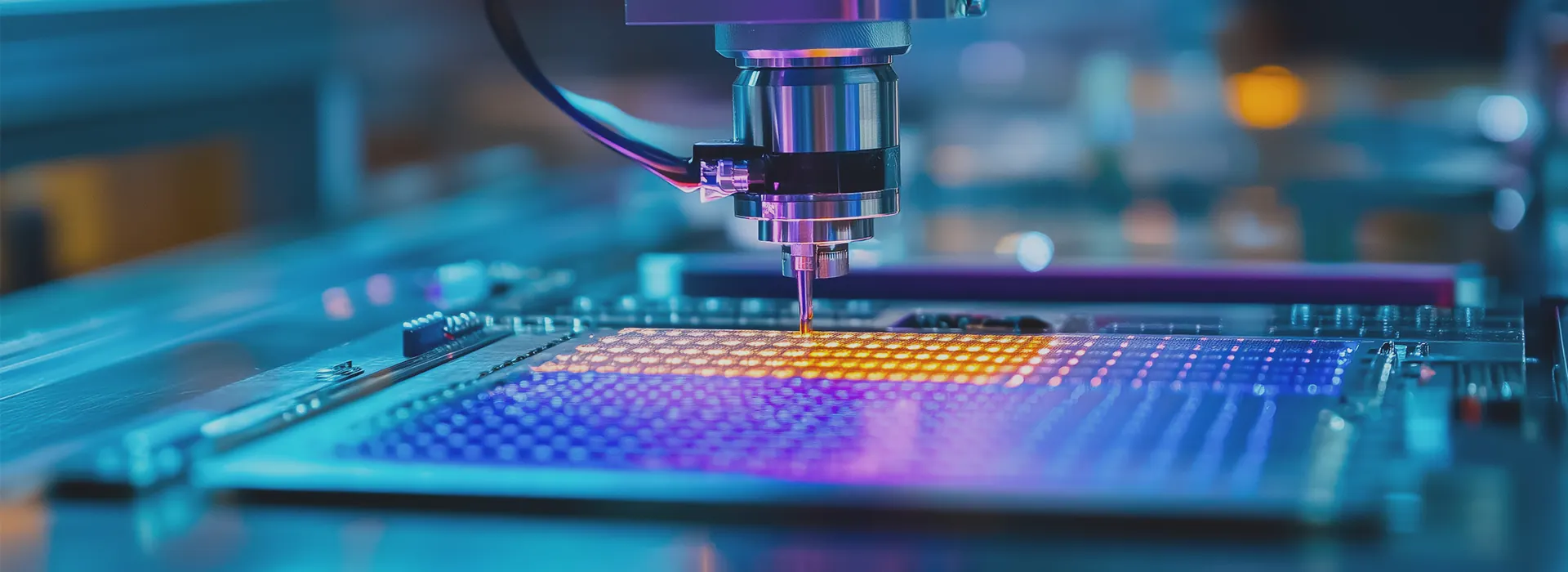
Lithography is the foundation of MEMS fabrication and determines feature size and pattern accuracy. MEMS lithography may include UV lithography with submicron resolution, electron-beam lithography for nanoscale R&D and small-batch work, and nanoimprint lithography for high-resolution, lower-cost large-scale nanopatterning. Process optimization includes resist selection, resist thickness control, exposure dose, focus and development parameters.
Thin-film deposition supports the formation of functional layers, structural layers, electrodes and insulating layers. Different MEMS materials require different deposition routes, and film stress, adhesion, uniformity and compatibility are all critical.
Etching directly affects device performance and yield. Wet etching features simple equipment, low cost and high selectivity, and is used for silicon bulk micromachining and sacrificial-layer release. Dry etching, including RIE and DRIE/Bosch processes, provides better anisotropy and high-aspect-ratio capability for comb structures, inertial sensors and microchannels. Key parameters include selectivity, anisotropy, etch uniformity and surface roughness.
Bonding and packaging are especially important for MEMS because devices often require mechanical protection, environmental isolation and stress matching. Wafer-level bonding may include direct silicon bonding, anodic bonding between silicon and glass, and intermediate-layer bonding such as Au-Au eutectic or glass-frit bonding. Packaging requirements include hermeticity for gyroscopes and resonators, stress isolation and material compatibility for applications such as bio-MEMS.
A capacitive accelerometer process may start with double-side-polished silicon, thermal oxidation to form an SiO₂ mask, backside lithography and etching to form a proof-mass cavity, front-side deposition and patterning of a polysilicon structural layer, backside DRIE release of the proof mass, and glass-cap bonding for vacuum packaging. Critical technologies include smooth sidewall control in deep silicon etching, polysilicon stress control and vacuum bonding.
A Digital Micromirror Device (DMD) process may include CMOS address-circuit fabrication, spin coating and patterning of a sacrificial photoresist layer, deposition and patterning of aluminum reflective mirrors, hinge formation, sacrificial-layer release using supercritical CO₂ drying and sealed packaging. Planarization, stress-balanced design and anti-stiction measures are key technologies.
Future MEMS fabrication will move toward higher integration, including monolithic multi-sensor integration such as accelerometers, gyroscopes and magnetometers in IMUs, as well as heterogeneous integration of MEMS with IC, optical and biological functions.
Feature sizes will continue to shrink as NEMS and MEMS technologies converge and atomic-scale manufacturing methods are introduced. New material systems, including two-dimensional materials such as graphene and MoS₂, piezoelectric materials and magnetostrictive materials, will be integrated with silicon processes. Green manufacturing will focus on reducing hazardous chemicals, lowering energy consumption and developing biodegradable MEMS devices.
Challenges remain in process standardization, packaging cost, reliability and testing. Compared with IC processes, MEMS processes are less standardized, which increases foundry cost. Packaging may account for a large portion of total cost. Microscale material behavior differs from macroscopic behavior, making long-term reliability prediction difficult. Online testing and reliability evaluation methods for micro/nano structures also need further improvement.
With the growth of AI, IoT and intelligent systems, MEMS will gain broader applications. Progress in micro/nano fabrication will push MEMS toward higher performance, lower cost and more functions, making it a key bridge between the physical and digital worlds.