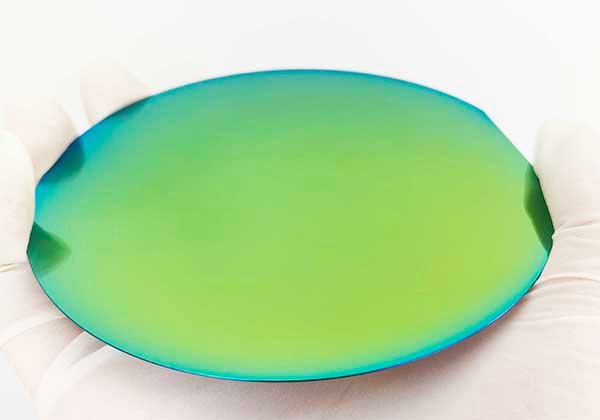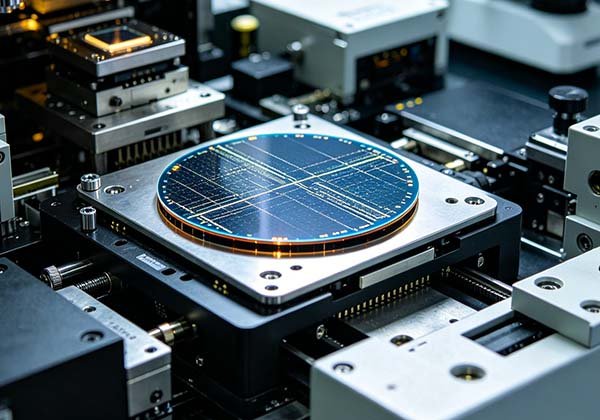


Thin-film deposition is one of the core processes in micro/nano fabrication for microelectronics, optoelectronics and MEMS. It refers to growing or covering a substrate surface with a film whose thickness ranges from several nanometers to several micrometers. As device dimensions shrink and performance requirements rise, deposition technology becomes increasingly important.
Physical Vapor Deposition (PVD) forms films by vaporizing source materials through physical methods and condensing them on a substrate. It mainly includes evaporation and sputtering.
Thermal evaporation heats a source material until it evaporates and condenses on the substrate. Electron-beam evaporation uses a high-energy electron beam to locally vaporize the source, reducing crucible contamination and enabling deposition of high-melting-point materials such as tungsten and molybdenum. Evaporation equipment is relatively simple and deposition rates can be high, but film density and step coverage are limited.
Sputtering deposition uses energetic particles, usually Ar⁺ ions, to bombard a target so that target atoms are ejected and deposited on the substrate. DC sputtering, RF sputtering and magnetron sputtering are common methods. Magnetron sputtering confines electrons with a magnetic field to increase ionization efficiency, offering high deposition rate, low substrate temperature and dense films. Reactive sputtering introduces gases such as nitrogen or oxygen to deposit compound films such as TiN or SiO₂.
Chemical Vapor Deposition (CVD) forms solid films through chemical reactions of vapor-phase precursors on the substrate. It provides good step coverage and controllable film composition. APCVD is simple but has weaker uniformity, while LPCVD operates at low pressure and offers better uniformity for materials such as polysilicon and silicon nitride.
Plasma-Enhanced CVD (PECVD) uses plasma to activate reaction gases and significantly reduces deposition temperature, often to 200–300°C. It is compatible with CMOS processes and widely used for SiO₂ and SiNx dielectric films. Film stress can be adjusted through RF power and pressure.
Atomic Layer Deposition (ALD) is a self-limiting surface reaction process that alternately introduces different precursors to achieve monolayer-level control. Although its growth rate is slower, ALD provides excellent conformality, uniformity and thickness precision, making it highly suitable for high-aspect-ratio structures such as DRAM capacitors and 3D NAND. Spatial ALD and related variants are being developed to improve throughput.
Epitaxy grows a single-crystal film on a single-crystal substrate while continuing the lattice structure. Molecular Beam Epitaxy (MBE) operates in vacuum and precisely controls molecular beams, enabling atomically flat interfaces and accurate composition control for III-V compound semiconductors, quantum wells and superlattices.
Metal Organic CVD (MOCVD) uses metal-organic precursors and is suitable for large-scale production. By controlling parameters such as the V/III ratio, it can regulate film crystallinity and is widely used for GaN-based LEDs, HEMTs and other optoelectronic devices.
As device dimensions enter the nanoscale, deposition technologies face new requirements. Low-temperature processes such as plasma-assisted ALD help reduce thermal budget. Controlled deposition of new materials such as graphene, transition-metal dichalcogenides, high-k dielectrics and ferroelectric films is becoming a research focus.
Large-area uniformity is increasingly important for display panels and photovoltaics, promoting linear-source sputtering and roll-to-roll deposition. Intelligent process control combining in-situ monitoring, ellipsometry, quartz crystal microbalances and AI algorithms will support real-time optimization and defect detection.
Thin-film deposition has developed into a rich process system. In production, the method must be selected according to material properties, device structure and process compatibility. Future deposition will move toward atomic-level precision, low-temperature efficiency and large-area uniformity, supporting the performance improvement and functional innovation of micro/nano devices.