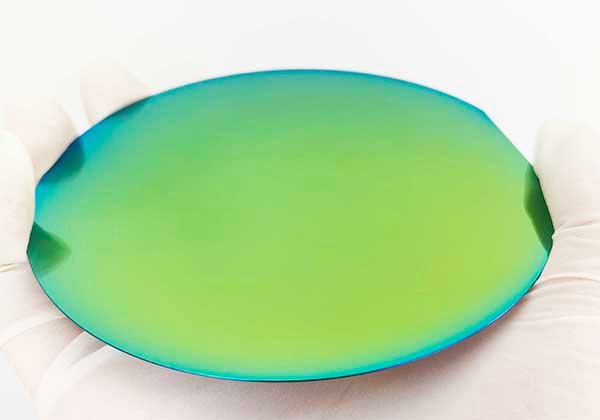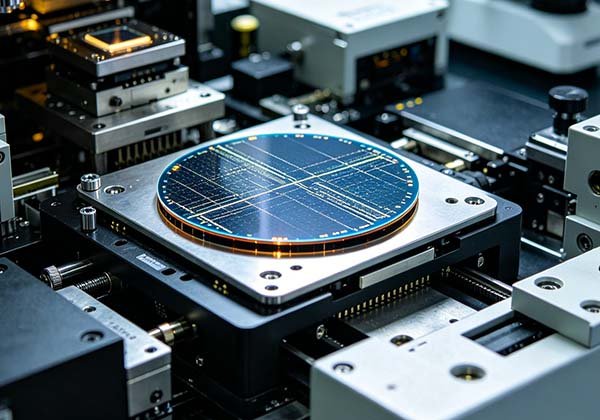


Photomasks are essential tools in semiconductor and microelectronics manufacturing. They carry the designed circuit pattern and enable lithography systems to transfer that pattern onto photoresist-coated wafers. The accuracy and quality of the photomask directly influence pattern fidelity, critical dimension control and final device performance.
A semiconductor photomask is typically made from a high-transparency quartz substrate coated with an opaque or semi-transparent pattern layer, often chromium or other specialized materials. During lithography, light passes through or is blocked by the mask pattern, exposing selected areas of photoresist on the wafer.
Because photomasks define device geometry, they must provide excellent dimensional accuracy, low defect density, high flatness and stable optical properties. Even small defects on a mask may be repeatedly printed onto many chips, making mask inspection and repair critical.
Common photomasks include binary chrome masks, phase-shift masks and advanced masks for high-resolution lithography. Binary masks use opaque and transparent regions to define patterns. Phase-shift masks improve resolution by controlling light phase. Advanced nodes may require more complex optical proximity correction and mask enhancement techniques.
Quartz is widely used because of its high optical transparency, thermal stability and low expansion. Chromium provides good opacity and pattern durability. For advanced applications, mask materials and structures must match exposure wavelength, process node and pattern-transfer requirements.
Photomask manufacturing involves substrate cleaning, resist coating, pattern writing, development, etching, resist stripping and inspection. Electron-beam writing is often used for high-resolution mask patterning. After pattern formation, the mask is carefully inspected for defects such as pinholes, particles, pattern distortion or chromium residue.
Repair processes may be used to correct local defects. Defect control, registration accuracy and critical-dimension uniformity are key indicators of photomask quality. In advanced manufacturing, mask data preparation, optical proximity correction and strict quality control are integral parts of the workflow.
In semiconductor manufacturing, photomasks support repeated and high-throughput pattern transfer. In MEMS and micro/nano fabrication, masks are also used to define sensor structures, microfluidic channels, electrodes and etching windows. Different materials, thicknesses and process requirements may require customized mask design.
As device structures become smaller and more complex, photomask technology continues to evolve toward higher resolution, lower defects and better process compatibility. High-quality masks remain a foundation for reliable lithography and stable microelectronics manufacturing.