

In the digital era, chips are the brains of electronic products. Their performance determines the competitiveness of technology products. Semiconductor silicon wafers and micro/nano fabrication are the two core pillars supporting chip development: the wafer is the foundation, while micro/nano fabrication is the precision tool used to sculpt it.
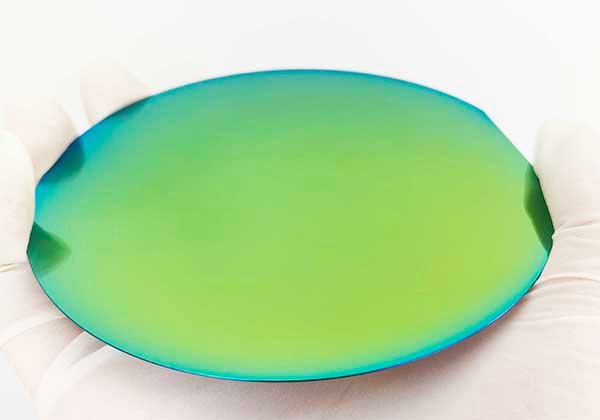
Silicon is the preferred substrate material for chip manufacturing because of its physical and chemical properties. It is abundant, cost-controllable and has excellent semiconductor behavior. Its conductivity can be adjusted through doping with elements such as phosphorus or boron. Silicon can also form a stable silicon dioxide insulating layer, which is highly compatible with metal interconnect processes.
Wafer sizes have developed from 4-inch and 6-inch wafers to mainstream 12-inch (300 mm) wafers. Larger wafers allow more chips to be produced from a single substrate, significantly reducing production cost. Today, 12-inch wafers have become the mainstream platform for high-end chip production.
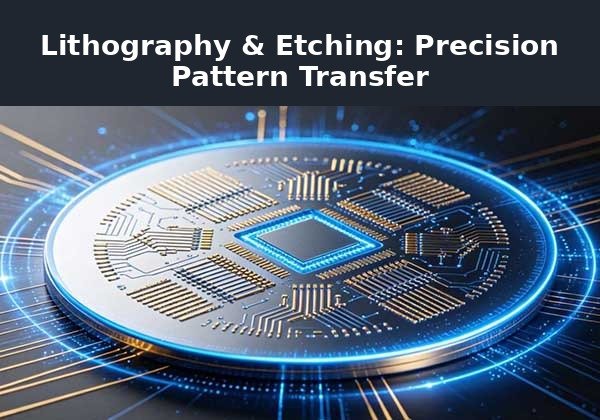
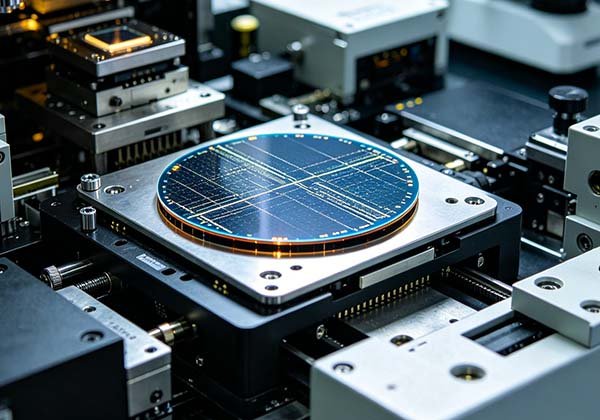
Micro/nano fabrication turns the chip design into physical structures on the wafer. Lithography transfers circuit patterns onto photoresist-coated wafers, and advanced EUV lithography with a wavelength of 13.5 nm enables extremely fine patterns. Etching removes unwanted material after lithography so that circuit structures can be formed. Dry etching provides high precision for advanced nodes, while wet etching remains useful in mature processes.
Thin-film deposition forms metal and insulating layers, and doping adjusts silicon conductivity. Together, these processes form a complete micro/nano fabrication system that enables complex logic operations and data storage.
The coordinated development of silicon wafers and micro/nano fabrication drives chip upgrades. Higher wafer purity and flatness support better process precision, while advanced fabrication places stricter requirements on wafer quality. With AI, 5G and autonomous driving driving higher chip-performance demands, this interaction will become even more important.
Future technologies such as quantum chips and two-dimensional material chips may require special silicon-based materials or heterostructures. At the same time, micro/nano fabrication will explore electron-beam lithography, nanoimprint and other new methods beyond conventional optical limits.