

With the rapid development of microelectronics and optoelectronics, micro/nano fabrication has become a core foundation of high-end manufacturing. Semiconductor micro/nano fabrication is a key branch that determines chip performance and device integration. Among its many processes, magnetron sputtering coating has become an important technology for preparing semiconductor thin films because of its precision, stability and broad material compatibility.
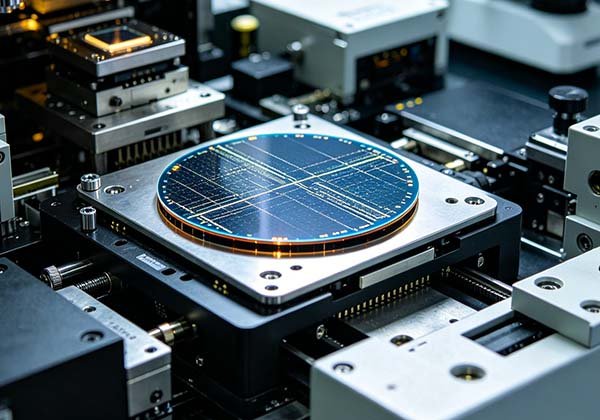
Micro/nano fabrication refers to processing, manufacturing and assembly at micrometer to nanometer scales. It includes lithography, coating, etching, doping and other processes, and is widely used in semiconductors, MEMS and optical devices. Semiconductor micro/nano fabrication applies these technologies to semiconductor substrates such as silicon wafers to build circuits and functional films with nanometer-level precision.
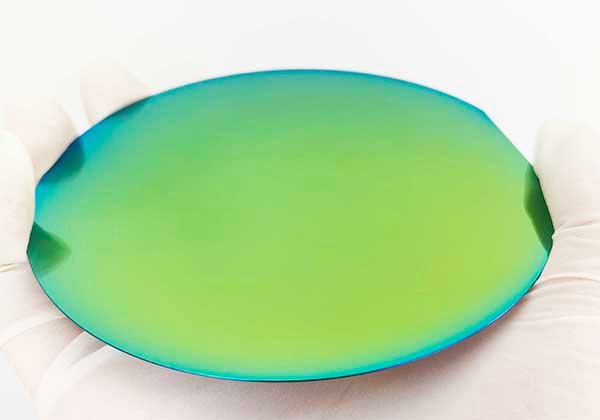
Thin-film preparation is a key step in semiconductor micro/nano fabrication. Metal interconnects, insulating layers and optoelectronic functional films all require high-precision coating technologies, which is why magnetron sputtering has become a mainstream option.
Magnetron sputtering is based on Physical Vapor Deposition (PVD). In a vacuum environment, a combined electric and magnetic field ionizes inert gas such as argon to form plasma. Positive ions bombard the target material, sputtering atoms or molecules that then deposit on the substrate to form a uniform and dense film.
Compared with conventional evaporation, magnetron sputtering offers high film quality, strong adhesion and good stability. Magnetic confinement improves plasma utilization and enables uniform sputtering. The technology is compatible with metals such as copper and aluminum, alloys, oxides, nitrides and semiconductor materials. By adjusting power, pressure and temperature, film thickness can be controlled with nanometer-level precision.
In metal interconnect fabrication, magnetron sputtering can prepare high-quality copper seed layers and barrier layers such as titanium nitride. These layers are important for conductivity and reliability in advanced processes. In MOSFETs, sputtering can be used to deposit gate-related functional films, helping improve switching speed and breakdown performance.
In power and optoelectronic semiconductors, magnetron sputtering can prepare wide-bandgap semiconductor films such as SiC and GaN-related materials, as well as transparent conductive films such as indium tin oxide (ITO). These films support power chips for new energy vehicles and RF devices for 5G base stations.
As semiconductor fabrication moves toward atomic-scale precision, magnetron sputtering is also evolving. High-Power Impulse Magnetron Sputtering (HiPIMS) can generate high-density plasma and further improve film density and purity. Multi-target co-sputtering and in-situ coating enable precise material ratios and continuous multilayer deposition, reducing interface contamination.
Magnetron sputtering is therefore not only a key process in semiconductor micro/nano fabrication, but also an important bridge between thin-film materials and high-performance device manufacturing.