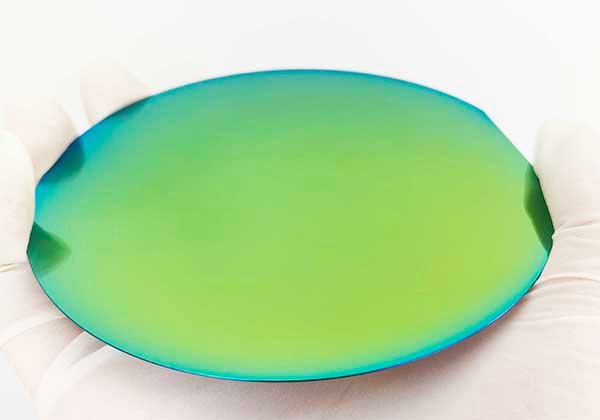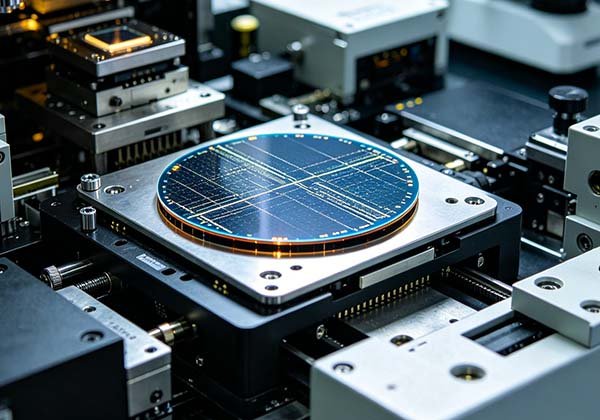


In the precise world of semiconductor manufacturing, coating is like putting a specially designed armor on chips. It is a key link for guaranteeing chip performance and a core driver of semiconductor technology breakthroughs. The process combines materials science with precision manufacturing.
The first value of semiconductor coating is to build insulation and protection barriers. Billions of transistors are connected by metal lines inside a chip. Without insulation, direct contact between lines may cause short circuits. CVD silicon dioxide films in CMOS manufacturing can be controlled from several nanometers to tens of nanometers, preventing leakage while withstanding later high-temperature processes. These films also block moisture and impurities, reducing oxidation and corrosion of metal lines and improving reliability.
Coating technology also expands semiconductor functions. In image sensors, transparent conductive ITO films deposited by magnetron sputtering combine conductivity with high optical transmission and are important for camera chips. In power semiconductors, aluminum nitride thermal-insulating films can improve heat dissipation efficiency, helping solve overheating problems in high-power devices.
Advanced coating processes support continued process-node scaling. When chip processes enter 7 nm and 5 nm nodes, transistor dimensions approach physical limits. ALD enables uniform, high-purity films through precise atomic-layer control. It can form thinner gate dielectrics and support three-dimensional transistor structures, reducing leakage and improving switching speed.
Coating also contributes to cost control and green manufacturing. Optimized coating materials can reduce precious-metal consumption. Environmentally friendly processes, such as fluorine-free plasma coating, can reduce harmful emissions and support sustainable semiconductor manufacturing.
From insulation and protection to functional expansion, process breakthroughs and green manufacturing, semiconductor coating gives chips performance and durability in the microscopic world. As the industry moves toward more advanced nodes and broader applications, coating technology will continue to play a key role.