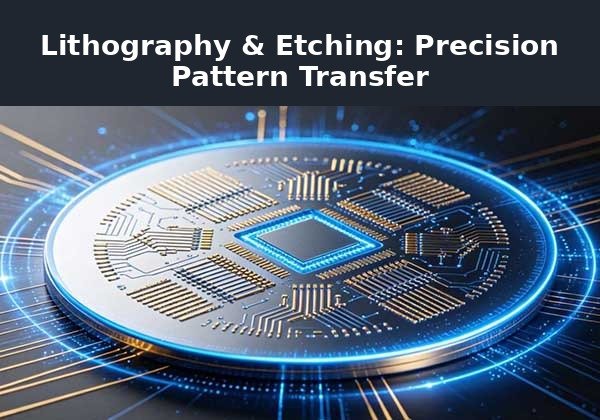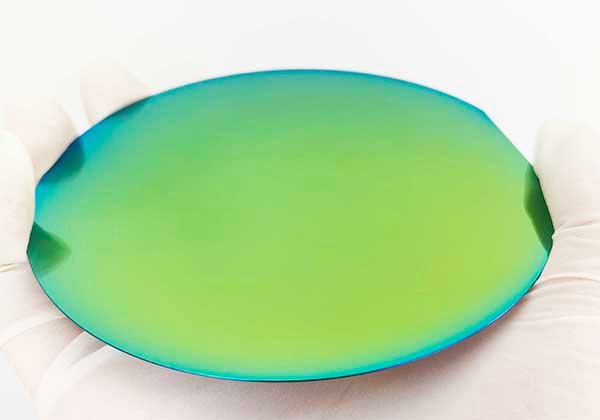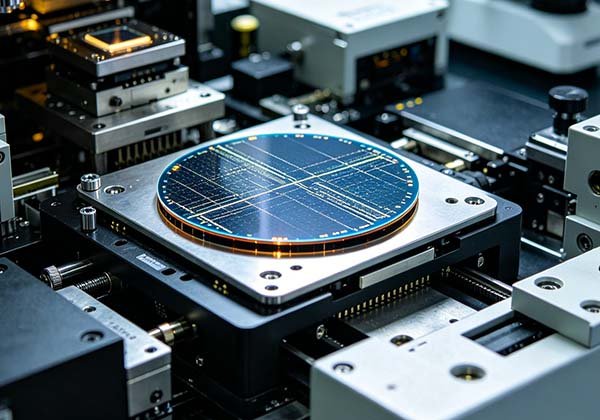


Micro/nano fabrication technology is a core support for high-end manufacturing such as semiconductors and MEMS. Semiconductor micro/nano fabrication focuses on precision processing of semiconductor materials and directly affects chip integration and performance. MEMS fabrication focuses on mechanical-electrical microstructures used in sensors and actuators. This article compares lithography, etching, deposition, ion implantation and bonding.
Lithography is the core foundation of micro/nano fabrication. It transfers mask patterns onto a substrate through photoresist reactions. Its advantages include high resolution, strong batch-processing capability and suitability for advanced chip manufacturing. EUV lithography can achieve nanometer-scale line widths. Its limitations are high equipment investment, complex process flow, strict environmental requirements and limited ability to directly form complex 3D MEMS structures.
Etching selectively removes substrate materials after lithography. Dry etching provides excellent anisotropy, precise depth control and good sidewall verticality, making it suitable for fine chip structures. Wet etching is efficient, low-cost and simple, and is useful for batch processing of simpler patterns. Limitations include the high cost and complexity of dry etching and the undercut and lower accuracy of wet etching.
Deposition prepares thin films on substrate surfaces and includes PVD and CVD. PVD provides high film purity, strong adhesion and lower process temperature, making it suitable for heat-sensitive materials and chip electrodes. CVD offers fast deposition, uniform thickness and good step coverage for complex patterns. PVD can have weaker large-area thickness control, while some CVD processes require high temperature and may affect temperature-sensitive substrates.
Ion implantation introduces high-energy ions into a substrate to change composition and properties. It is central to semiconductor doping. It offers strong control over dopant concentration, depth and position, and can also improve MEMS surface wear and corrosion resistance. Its limitation is high processing cost and possible lattice damage that requires annealing.
Bonding builds composite substrate structures and is critical for MEMS 3D structures and semiconductor packaging. Anodic bonding provides high strength and good sealing at relatively low temperature, eutectic bonding is fast and suitable for metal-semiconductor bonding, and direct bonding avoids intermediate layers. However, bonding requires high surface flatness, and thermal-expansion mismatch may generate stress or cracking.
In practical semiconductor and MEMS fabrication, these technologies are often combined according to device performance, cost and production requirements. Future innovation will reduce their limitations and provide stronger support for semiconductor and MEMS development.