

Driven by IoT, smart terminals and industrial sensing, demand for MEMS devices continues to rise because of their miniaturization, integration and low power consumption. However, MEMS manufacturing is multidisciplinary. From early design to final production, each step faces challenges such as process complexity, precision control and unstable yield. Building a full-process solution based on mature micro/nano fabrication is therefore essential.
The design stage is the foundation of MEMS device manufacturing and determines the feasibility of later processes. Many MEMS projects emphasize function while underestimating process constraints, causing design schemes to deviate from actual manufacturing capability and requiring repeated modifications. A full-process solution builds a design-process collaboration system and uses process simulation to predict risks early.
For microstructure formation, finite-element simulation can model lithography and etching to estimate dimensional deviation, stress distribution and other key parameters. Historical processing data can provide standardized process-parameter libraries for silicon, glass, polymers and other materials, helping designers choose compatible structures and material combinations and avoid process conflicts at the source.
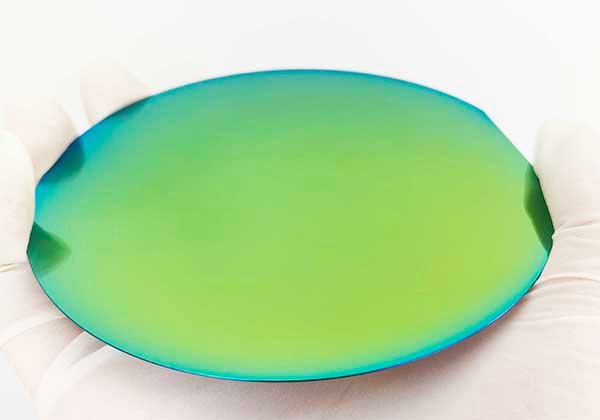
Material preparation directly affects MEMS performance stability. For silicon-based MEMS devices, surface flatness and impurity level are critical to later microfabrication accuracy. High-precision purification and pretreatment processes are used to control wafer quality.
CMP can reduce silicon-wafer surface roughness to the nanometer level, supporting accurate lithography pattern transfer. Plasma cleaning removes oil, oxide and other surface contaminants, improving adhesion for later film deposition. For high-temperature sensors or other special MEMS devices, ceramic or silicon carbide materials may be introduced, together with dedicated pretreatment processes to meet operating requirements.
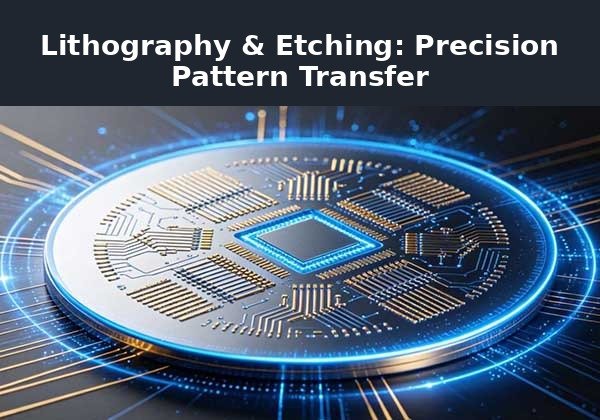
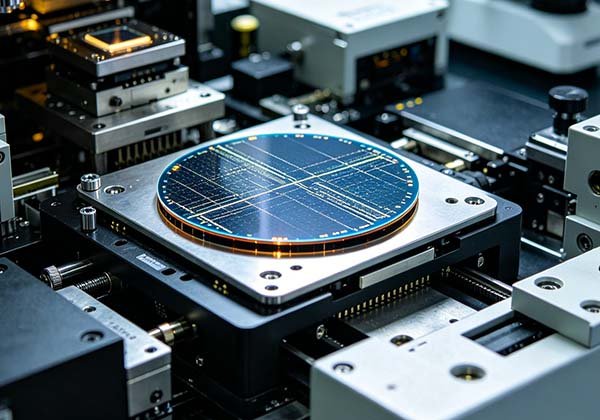
Core MEMS formation includes lithography, etching and thin-film deposition. For diverse microstructure sizes and strict accuracy requirements, DUV lithography and high-precision alignment can achieve submicron exposure. For high-aspect-ratio structures, step-and-scan lithography combined with customized photoresist improves resolution and sidewall verticality.
Etching processes must be selected according to material and structure. RIE can precisely control etch depth and sidewall angle in silicon microstructures by adjusting gas ratio and power. Wet etching with dedicated solutions can ensure uniformity and selectivity for structures such as metal electrodes. Thin-film deposition processes such as PVD and CVD prepare metal, insulating and piezoelectric films according to device function, with optimized temperature and pressure to improve thickness uniformity, density and electrical properties.
Packaging and testing are the final gateways to MEMS application. Packaging must provide electrical connection while satisfying environmental requirements such as moisture resistance, vibration resistance and high-temperature tolerance. Consumer MEMS sensors may use miniaturized surface-mount packages, while industrial MEMS devices may use metal housings and sealing technologies to improve interference resistance and environmental adaptability.
Testing should cover electrical, mechanical and environmental reliability. High-precision instruments evaluate sensitivity, response speed and power consumption. Mechanical platforms simulate vibration and shock. Temperature and humidity cycling tests verify long-term stability. Data traceability links test results with earlier process parameters to support continuous optimization.
MEMS manufacturing is a complex system engineering task. A full-process solution coordinates design, process, material preparation, fabrication, packaging, testing and quality control, supporting efficient, high-precision and high-yield production. With the iteration of micro/nano fabrication, AI and big-data technologies will further promote intelligent and automated MEMS manufacturing.