

In micro/nano fabrication, drilling accuracy directly determines product performance, and edge chipping is a common challenge. Even a micron-scale edge defect can make a part unusable and greatly reduce yield. Many engineers repeatedly adjust parameters with limited improvement, while overlooking the core issue: chipping is often caused by a mismatch between the cutting method and the material properties.
Chipping in micro/nano drilling essentially results from uneven mechanical force or heat during processing, which concentrates stress at the edge and causes brittle fracture. For hard and brittle materials such as glass, ceramics and sapphire, the lack of ductility means stress cannot be released through deformation. If the cutting method is not suitable or the material selection is unreasonable, chipping becomes difficult to avoid. This is one of the most prominent pain points in hard-brittle material micro/nano fabrication.
The choice of cutting method is the key factor in determining whether chipping occurs. Different cutting technologies remove material in different ways and are suitable for different scenarios. Selecting the correct method is the first step in reducing chipping at the source.
Mechanical drilling is a traditional micro/nano drilling method. It is low-cost and convenient, but it has inherent limitations in micro-hole fabrication. When the hole diameter is below 100 μm, the tool diameter approaches the scale of a human hair and rigidity decreases sharply. Tool runout is likely to occur, and the squeezing and shearing forces generated during material contact directly cause edge chipping. Tool wear also increases cutting resistance, further concentrating stress and creating a “wear–chipping” cycle. This method is more suitable for materials with lower hardness and better toughness; when used on hard-brittle materials, the chipping rate increases significantly.
Electrical discharge machining (EDM) removes material by melting it through high temperature generated by instantaneous discharge. It is suitable for micro-hole processing of high-melting-point metals, but thermal removal also brings side effects. A recast layer forms during processing, and this layer contains micropores and microcracks with reduced mechanical strength, making the hole edge prone to chipping. The heat-affected zone can also accumulate residual stress, which may lead to delayed chipping during later assembly or cleaning. Therefore, EDM is not suitable for applications with strict edge-quality requirements.
In comparison, ultrashort-pulse laser cutting, such as femtosecond or picosecond laser processing, is better suited to high-precision micro/nano drilling and is often preferred for reducing chipping. Because the pulse duration is extremely short, energy is deposited before heat diffuses in the material, removing material through a “cold ablation” mechanism. The heat-affected zone can be controlled within 1 μm, effectively avoiding thermal-stress chipping. As a non-contact process, it does not create mechanical compression or plastic tearing, greatly preserving edge integrity. A three-stage energy scanning strategy—low-energy pre-ablation, full-power drilling and decreasing-energy edge finishing—can further optimize edge quality and keep chipping at a low level.
Beyond cutting method, the rationality of material selection and pretreatment also affects chipping probability. Many users focus only on process parameters but ignore whether the material itself is suitable for the selected machining method.
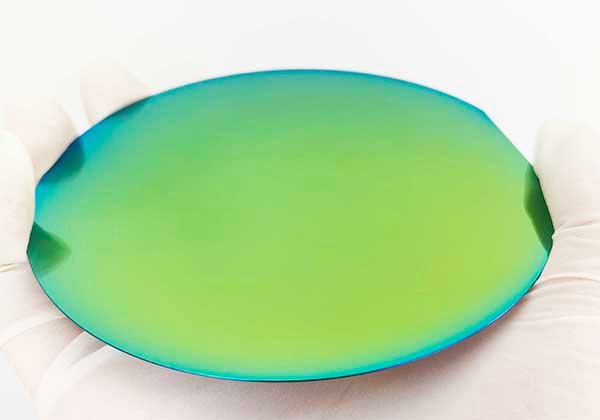
The matching of material hardness and toughness is central. Hard-brittle materials such as K9 glass and ceramics have high Mohs hardness but low toughness; they are likely to chip under small stress and should be processed using non-contact methods. Materials with better toughness, such as certain alloys and polymers, can use contact methods such as mechanical drilling to maintain efficiency while reducing chipping. Material purity and internal defects also matter. Impurities and microcracks concentrate stress during processing and trigger chipping, so materials should be screened and pretreated before fabrication to remove impurities and relieve internal stress.
Material thickness must also match the cutting method. Thin materials below 100 μm may crack at the edge when cut with excessive energy, while thick materials may not be fully cut if the energy is insufficient, causing chipping during subsequent cleaning. Auxiliary support during processing is also essential. Uniformly fixing the workpiece through vacuum adsorption or similar methods can improve stress distribution and reduce chipping caused by mechanical stress.
Chipping in micro/nano drilling is not unsolvable. The key is to identify the core contradiction: the match between cutting method and material characteristics. In practice, the appropriate cutting technology should be selected according to material hardness, toughness and thickness. Hard-brittle materials should preferentially use ultrashort-pulse laser cutting, while tougher materials may use mechanical drilling. Combined with material pretreatment, optimized cutting parameters and appropriate support, the chipping rate can be effectively reduced.
Avoiding chipping is not a matter of blindly adjusting parameters. It requires precise matching between the cutting method and material selection. Only in this way can micro/nano drilling balance precision and efficiency, reduce scrap and improve production yield.