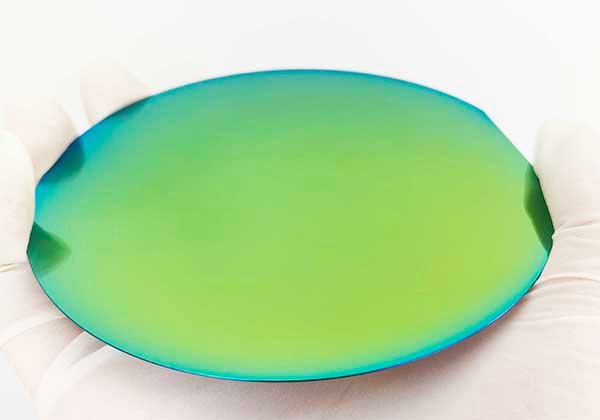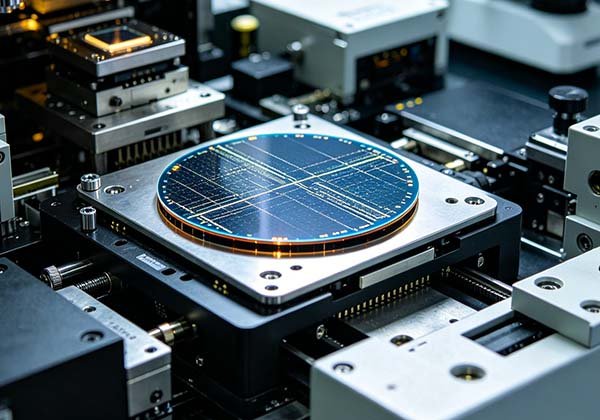


The core of chip manufacturing is micro/nano fabrication technology. Through the precise coordination of eight core processes and five key material categories, complex circuit structures are built at micro- to nanoscale dimensions to realize computing, storage and other chip functions. The complete workflow is like precision construction at the microscopic scale: every process and every material category has a defined role, and all of them must work together to transform a raw substrate into a finished device.
Eight core processes run through the entire chip manufacturing flow. They advance layer by layer and form the technical framework of micro/nano fabrication. Lithography, as the core of pattern transfer, uses the photochemical response of photosensitive materials to accurately transfer circuit designs onto the substrate surface. It is a key process that determines chip precision. By using different light-source wavelengths, lithography enables pattern replication from the micrometer scale down to the nanometer scale and provides the foundation for subsequent steps.
Thin-film deposition forms functional films on the substrate surface. It includes physical vapor deposition and chemical vapor deposition, and can precisely prepare metal, dielectric and other film types used to build conductive and insulating chip structures. Etching acts like microscopic carving. Using photoresist as a mask, it selectively removes excess material through wet or dry processes to form fine structures such as trenches and vias, ensuring accurate circuit formation.
Doping changes the electrical properties of materials by introducing impurity atoms. Diffusion or ion implantation is used to precisely control doping concentration and junction depth, forming core structures such as source/drain regions and PN junctions. Bonding connects multiple substrates through physical or chemical methods to realize structural integration and support advanced technologies such as 3D integration. Thinning and polishing adjust substrate thickness and produce ultra-smooth surfaces, supporting alignment accuracy for multilayer lithography. Dicing and drilling separate finished wafers into individual chips and create through-holes, completing final chip formation.
Working together with these eight processes are five core material categories, which form the basis of chip functionality and determine the upper limit of performance. The first category is semiconductor materials, mainly silicon, germanium and compound semiconductors. They act as the chip substrate and carry the core charge-transport function. The second category is metal materials, such as aluminum and copper, used to fabricate metal interconnect layers and ensure efficient electrical signal transmission.
The third category is dielectric materials, such as silicon dioxide and silicon nitride, which are used as insulating layers to isolate different circuit modules and prevent signal interference. The fourth category is photoresist, the core material for lithography; its photosensitive properties directly determine pattern-transfer precision and must match lithography technologies of different wavelengths. The fifth category includes auxiliary functional materials such as polishing slurry and adhesives, which ensure stable process execution and machining accuracy.
The collaboration between processes and materials is the key to chip manufacturing. Lithography relies on the photosensitivity of photoresist to achieve accurate pattern transfer. Deposition must match the properties of metals, dielectrics and other materials to select appropriate methods and ensure film uniformity and density. Etching parameters must be adjusted according to substrate and film materials to achieve selective removal. Doping must be combined with semiconductor material characteristics to control impurity injection and precisely tune electrical performance.
From the overall workflow, semiconductor materials are cut and polished into substrates. Photoresist transfers patterns through lithography, and etching and doping build the core circuits. Deposition lays down interconnect and insulating layers. Bonding, thinning and polishing optimize device structure. Finally, dicing and drilling produce finished chips. Every process must match the characteristics of the corresponding material, while material performance determines process precision and efficiency.
This synergistic relationship directly determines chip performance and yield. As chip feature sizes continue to shrink, requirements for process precision and material performance keep increasing. Process optimization drives the development of new materials, and new materials in turn enable more advanced processes. Together, they support the continuous development of micro/nano fabrication and the chip industry.