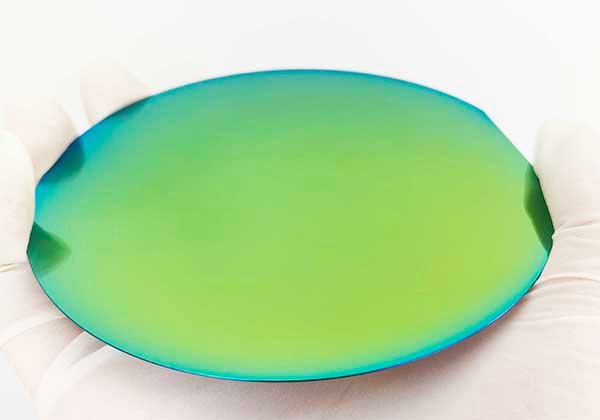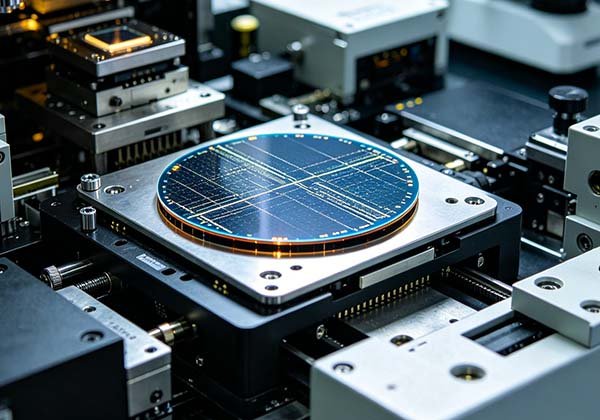


In micro/nano fabrication, thin-film deposition is one of the core processes and directly determines device performance and reliability. Physical vapor deposition (PVD) and chemical vapor deposition (CVD) are two mainstream coating technologies. PVD realizes atomic deposition through physical state transformation, while CVD grows films through gas-phase chemical reactions. Each technology has suitable application scenarios, and the key to selection is matching process characteristics with actual manufacturing requirements.
The difference in core principles is the basis for process selection. PVD is essentially a physical transfer process. Solid targets are vaporized by sputtering, evaporation or related methods, and gaseous particles travel in a vacuum environment and deposit on the substrate surface without chemical reaction. This line-of-sight deposition feature makes the process simple and controllable and allows high-purity coatings, but it cannot avoid shadowing effects. CVD depends on chemical reactions of gaseous precursors on the substrate surface to form films. Since gas can penetrate complex structural regions, CVD enables non-line-of-sight deposition and provides much better conformality than PVD.
From the perspective of key micro/nano fabrication requirements, process temperature and substrate compatibility are primary considerations. PVD is often performed from room temperature to around 300°C. Its low-temperature characteristics make it suitable for heat-sensitive substrates such as plastics and polymers, avoiding deformation or performance degradation caused by high temperature. It is especially suitable for thin-film preparation on precision electronic components. Conventional CVD processes often require temperatures above 600°C to drive reactions. Although plasma-enhanced CVD (PECVD) can reduce the process temperature to around 300°C, it is still difficult to apply to many heat-sensitive materials and is more suitable for high-temperature-resistant substrates such as silicon and hard alloys, for example the deposition of SiO₂ and SiNₓ films in MEMS devices.
Film properties and substrate geometry determine application scenarios. PVD is good at depositing pure metals, simple alloys and similar materials. Coating thickness is usually 0.25–5 μm. The films are thin, dense and hard, and can maintain the original dimensional tolerances of the substrate, making PVD suitable for precision coating on planar or simple structures, such as TiAlN coatings for micro/nano tools and anti-reflection coatings for lenses. CVD can prepare complex compounds, ceramics and carbon nanostructures such as graphene. Coating thickness can reach 10–20 μm, and adhesion is stronger. It is particularly suitable for uniform coating of deep holes and complex 3D microstructures, and is an important process for multilayer interconnects in semiconductor chips and anti-reflection films in photovoltaic cells.
The selection logic can be summarized as follows: if the application involves planar or simple structures, heat-sensitive substrates, or high-purity precision films such as metal electrodes or thin wear-resistant layers, PVD is often preferred. If the application involves complex 3D microstructures, thicker protective films or special functional compound films such as high-temperature protective coatings or semiconductor insulating layers, CVD is more suitable. In addition, PVD generally has lower operating costs and better environmental friendliness, making it appropriate for batch precision processing. CVD requires stricter management of toxic precursors, but remains irreplaceable in complex device manufacturing.
In conclusion, PVD and CVD do not have an absolute superiority relationship. In micro/nano fabrication, process selection should focus on three core factors: substrate properties, structural complexity and film material/performance requirements. Cost, safety and production compatibility should also be evaluated together to achieve an accurate match between thin-film deposition and device requirements.